
Dispatcher-managed fleets
Give the dispatcher a live fleet board without making the dispatcher the only thing keeping it accurate.
Crew Keys supports fleets where a dispatcher or vehicle coordinator hands over keys, verifies the employee took the correct vehicle, watches fleet status, and confirms returns. The same workflow can also move toward self-service because the accountability record is created by the transaction—not by the dispatcher remembering to update a second system.
The dispatcher is a control layer
The dispatcher should verify the handoff, not manually rebuild the fleet state all day.
In a manual process, the dispatcher knows which keys moved and which vehicles returned because they were physically present. Crew Keys turns that knowledge into a shared record so the fleet does not become inaccurate when the desk is busy, unattended, or changing shifts.
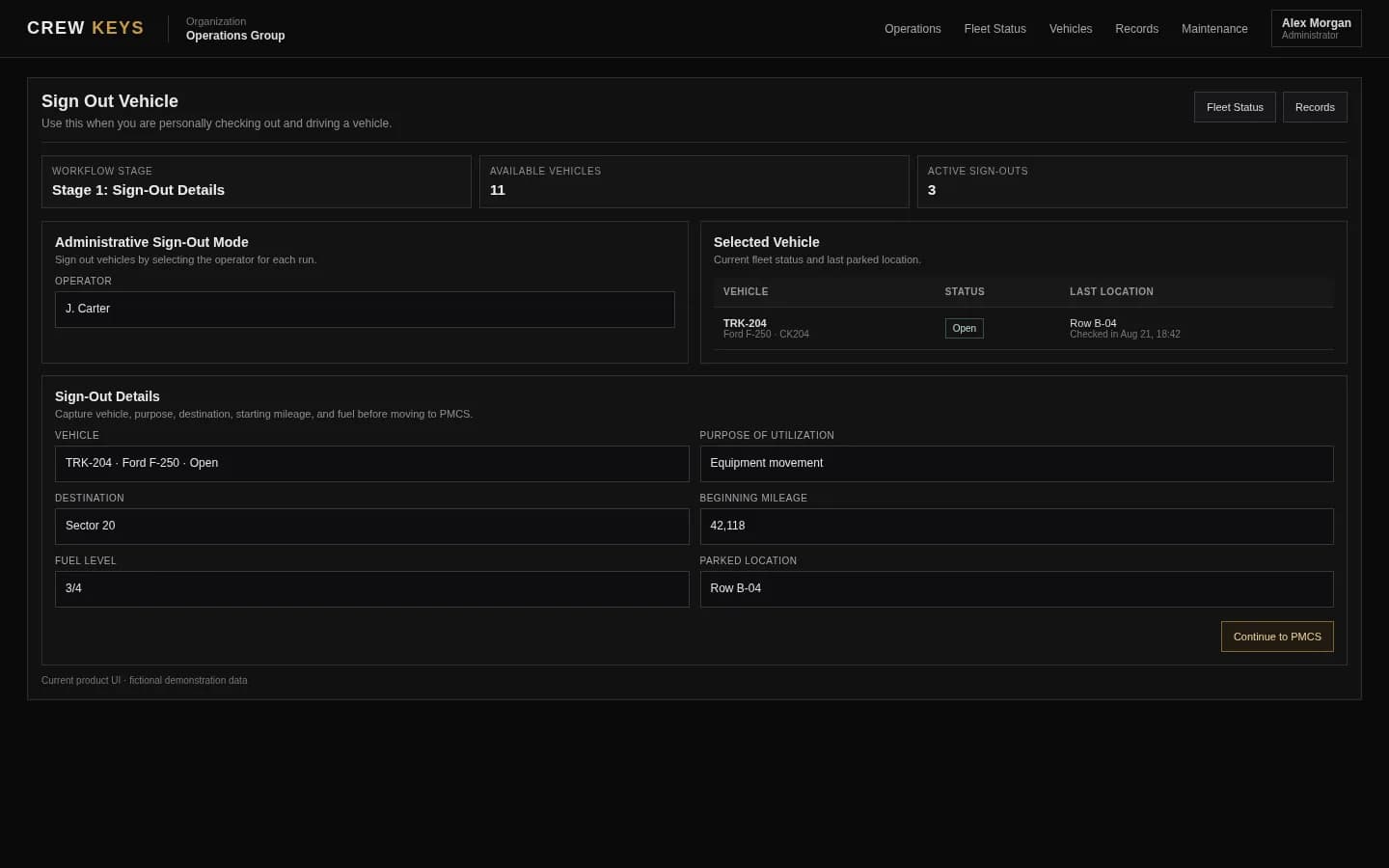
Three levels of control
Start dispatcher-assisted and automate the routine parts as the workflow matures.
Crew Keys does not require an organization to choose between a staffed key desk and complete self-service on day one. The same accountability record can support both.
A coordinator checks availability, verifies the employee and vehicle, then releases the key.
Highest human oversightThe employee completes checkout and return directly from a phone or shared workstation.
Routine transactions do not require a deskManagers focus on missing returns, unavailable vehicles, faults, and other mismatches.
Human attention goes where it mattersEvery completed handoff remains searchable after the live board changes.
Accountability survives the shiftThe operating model can remain dispatcher-assisted indefinitely. The value is that the dispatcher is no longer the only person who knows what happened.
Where manual processes fail
A staffed key desk still fails when the record depends on memory.
Even with a responsible person present, busy periods and routine shortcuts create the same data gaps found in paper sign-out systems.
Employee takes a different vehicle
The dispatcher expects one unit to leave, but the employee grabs another key or vehicle and the record is never corrected.
The live fleet picture is wrong immediatelyThe return is physically complete but digitally open
The key is handed back but the return step is skipped or delayed.
The vehicle remains falsely checked outThe dispatcher becomes a bottleneck
Every normal checkout, question, status check, and return requires the same person to be present.
Routine fleet use depends on staffing the deskTurnover loses context
A new dispatcher inherits keys and a list but not always the reasons a vehicle is unavailable or a record is incomplete.
The next person starts by reconcilingHow Crew Keys fits
Use the dispatcher for verification while Crew Keys carries the record.
The system supports the human control you already use, while reducing how much of the process has to exist only in that person’s head.
- 01
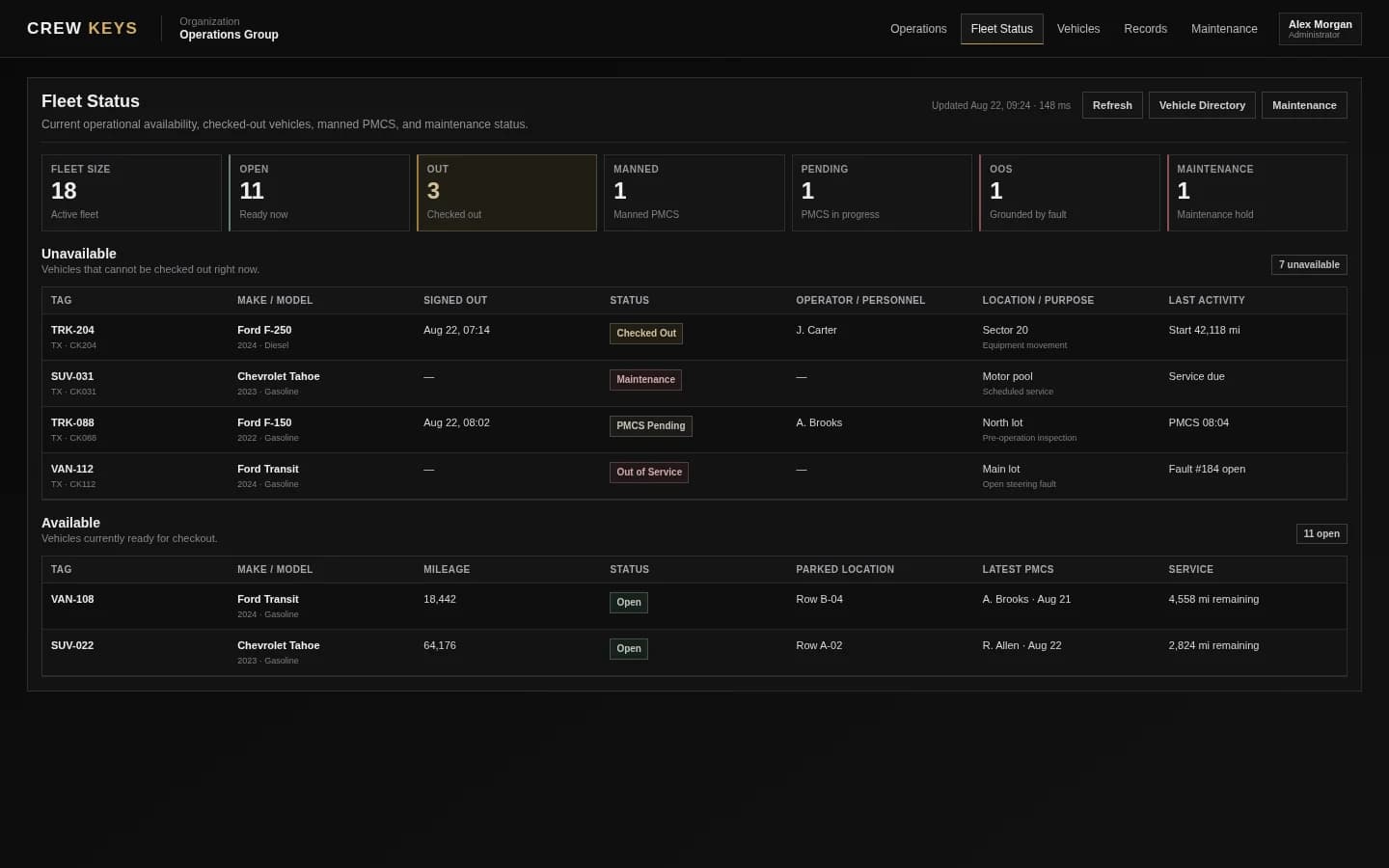
Dispatcher reviews live status
See which vehicles are available before touching the key rack or assigning a unit.
- 02
Employee and vehicle are confirmed
The checkout records the actual operator and actual vehicle that leave together.
- 03
Driver completes required steps
Inspection and other required information can be completed from the employee’s phone instead of being re-entered by the dispatcher.
- 04
Return closes custody
The vehicle is checked back in with ending mileage, fuel, location, notes, and any new issue so the status board changes for everyone.
Manage exceptions, not every compliant trip
The long-term goal is exception-based fleet oversight.
A person does not need to watch every compliant checkout forever if the system can show which transactions are incomplete or which vehicles should not be released.
Questions
Questions about this shared-fleet model.
Does Crew Keys replace a fleet dispatcher?
It can support a dispatcher-assisted operation or reduce the need for a dispatcher to process every routine transaction. The main goal is to make the shared fleet record accurate even when one person is not manually updating it all day.
Can a dispatcher complete checkout for an employee?
Crew Keys is built around shared-vehicle checkout and role-based workflows, so organizations can structure the handoff around the people responsible for releasing and using vehicles.
Can drivers check vehicles in themselves?
Yes. The browser-based workflow can be completed from a phone, allowing routine return information to be captured directly by the person returning the vehicle.
What should the dispatcher monitor once the process is digital?
The highest-value work becomes exceptions: vehicles still out, incomplete returns, unavailable units, inspection problems, faults, and maintenance conditions.
Related Crew Keys pages
Go deeper on the workflow behind the use case.
See the assignment and checkout workflow itself.
Explore fleet dispatch Vehicle checkoutSee how the operator and actual vehicle become one custody record.
See vehicle checkout Vehicle returnSee how the handoff is fully closed when the key comes back.
See vehicle return Company vehicle poolsSee how the same workflow supports many employees sharing a smaller fleet.
Explore company vehicle poolsShared vehicle accountability
Keep the dispatcher in control without making the fleet dependent on the dispatcher.
Crew Keys turns each vehicle handoff into the shared operational record, so normal transactions can become simpler and management can focus on exceptions.